
Kidney stones

The best treatment for kidney stones is the one that suits the individual patient and their specific stone
Dr. Ned Kinnear
Kidney stones: an overview
Things to know about kidney stones
Kidney stones are a common reason to see a urologist
You can have a single or multiple stones
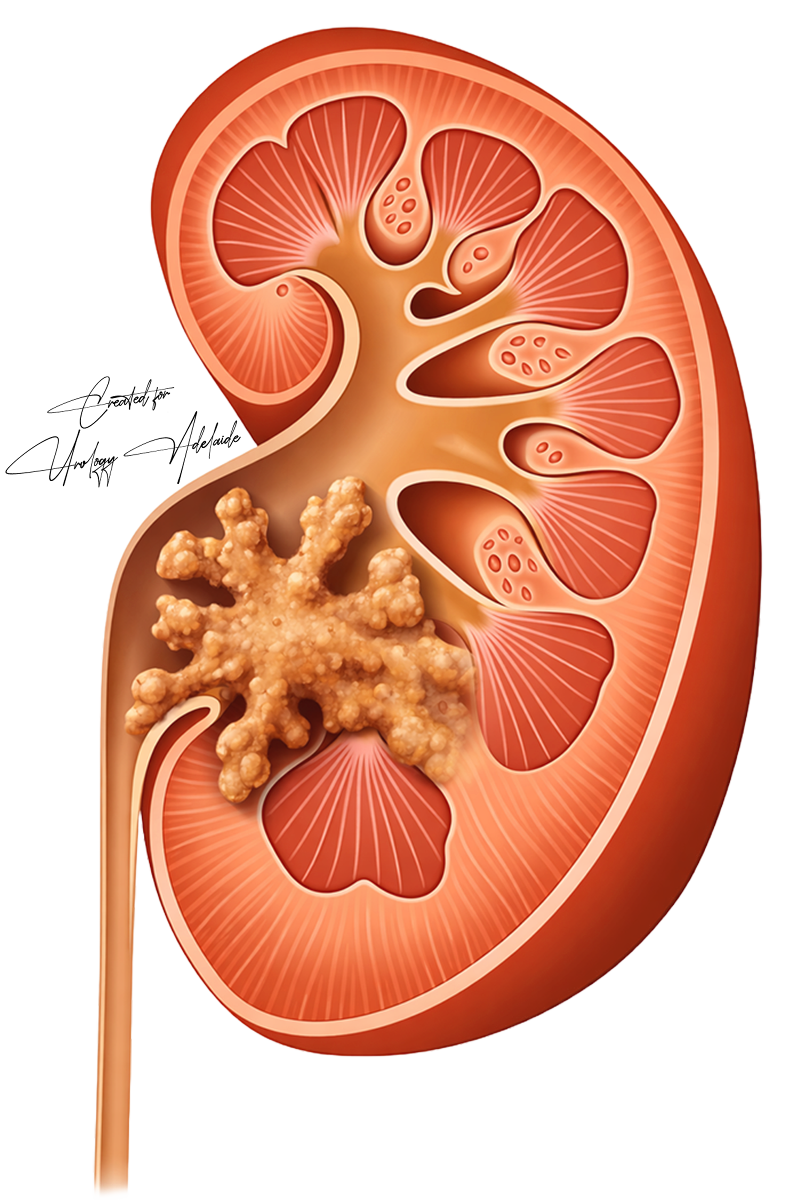
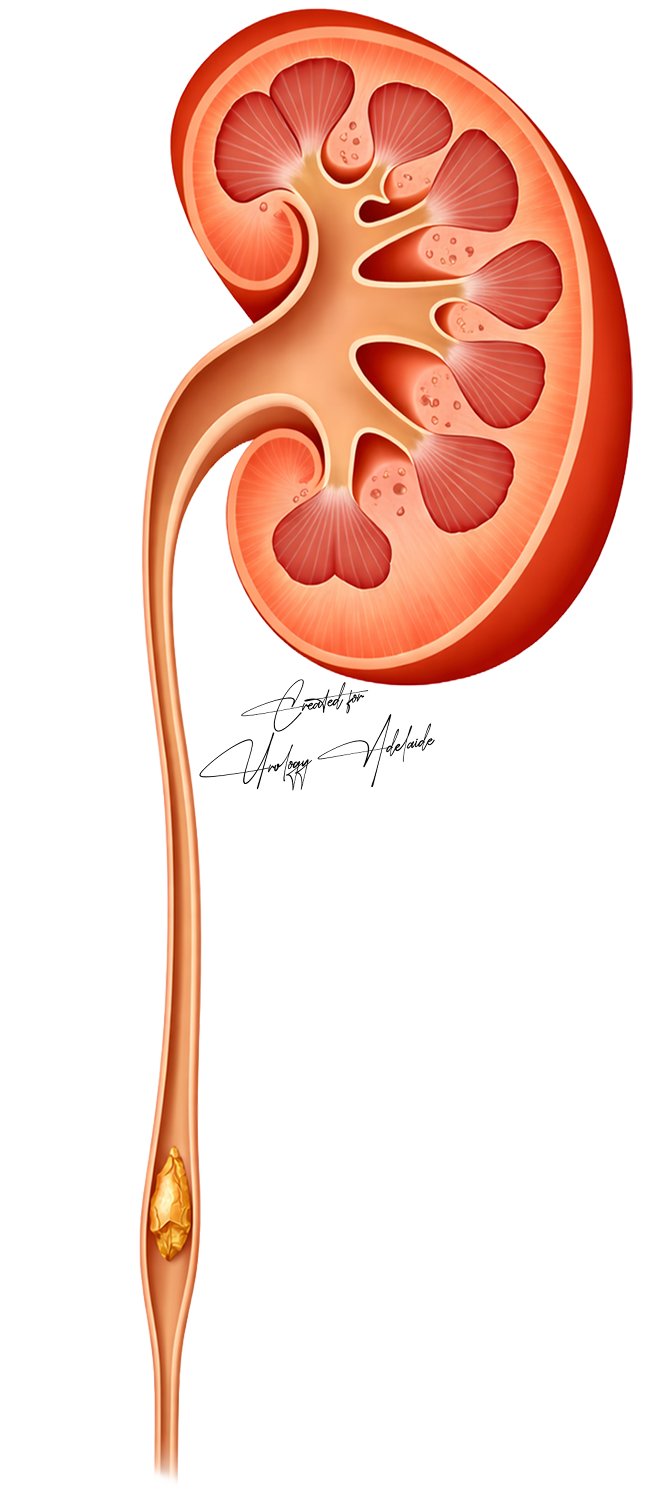
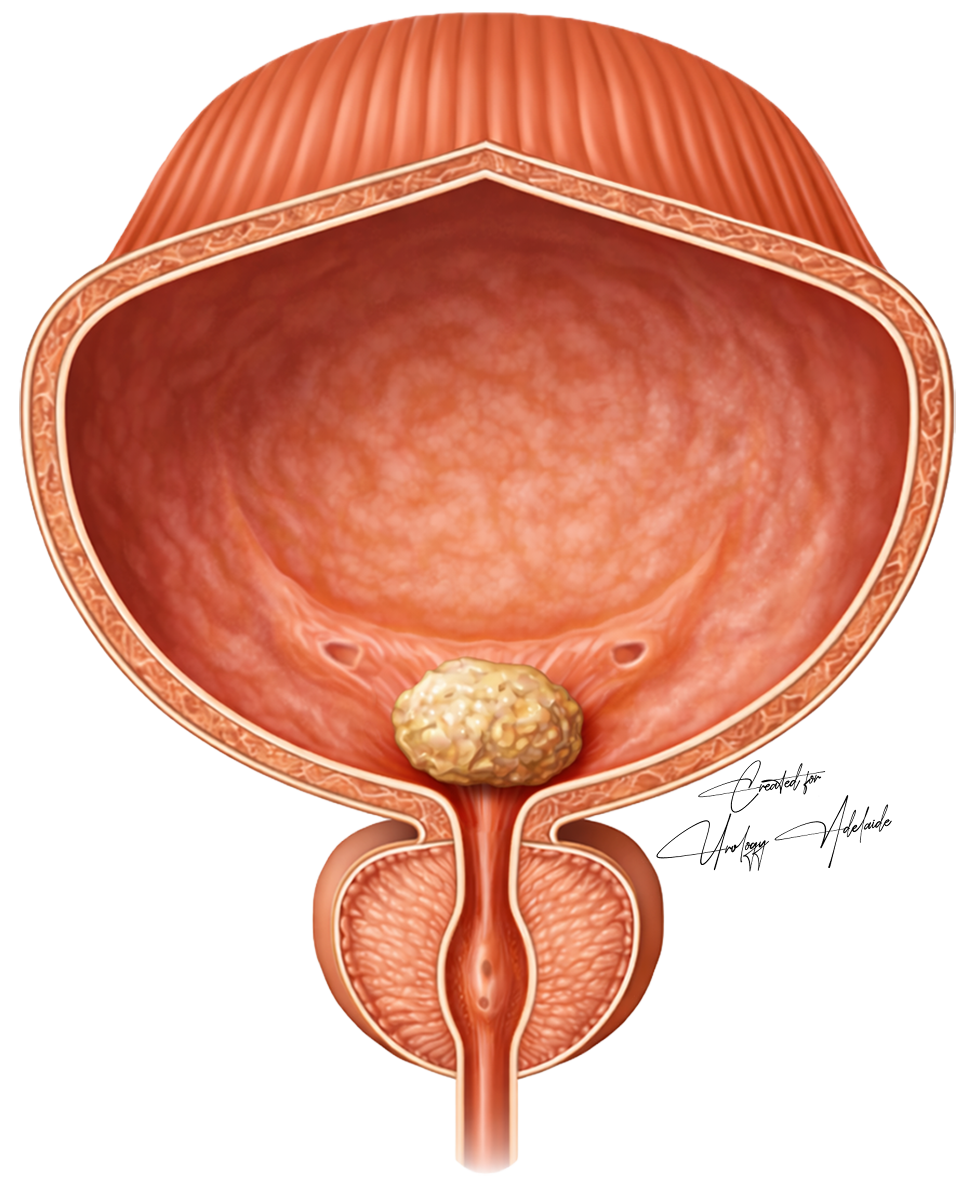
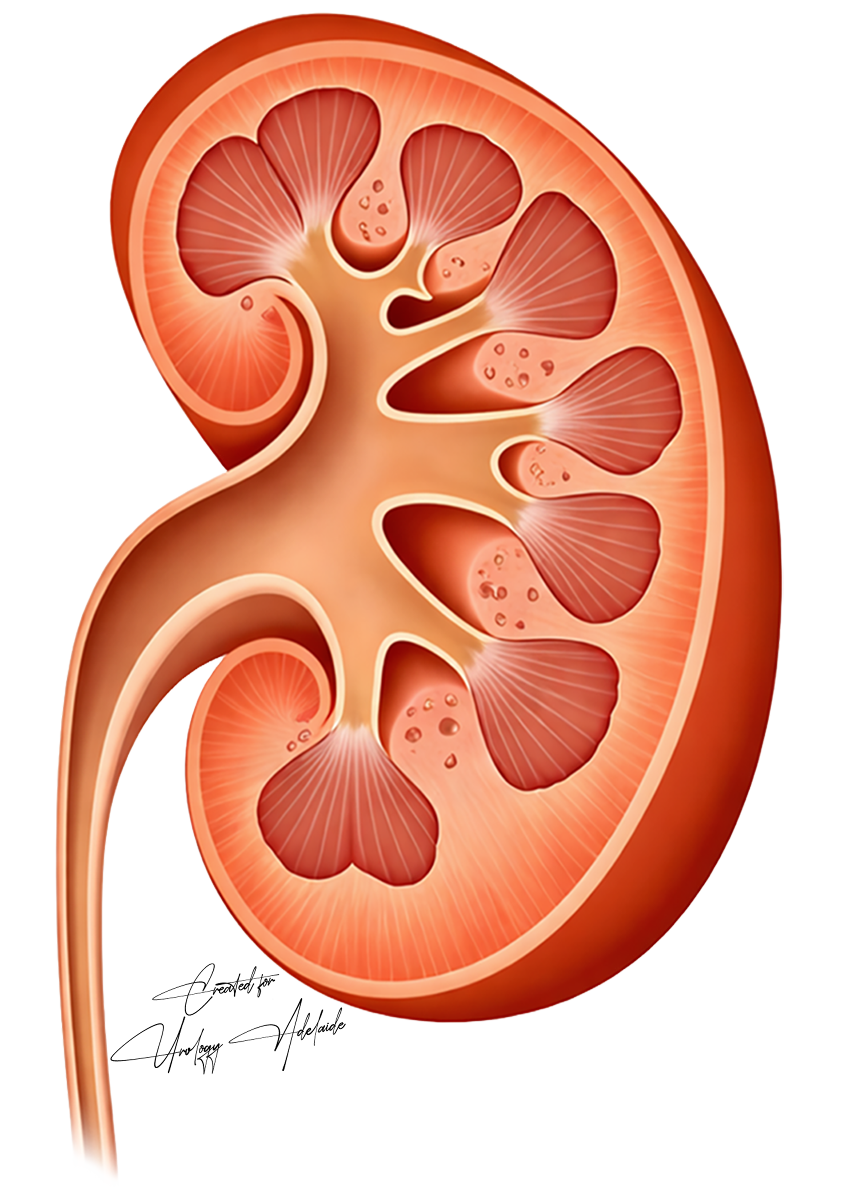
Stones can occur in the kidney or the ureter
Staghorn calculi branch into ≥2 cups (calyces) of the kidney
Kidney stones may sit silently in the kidney without causing any problems
If symptoms occur, they can cause pain, nausea and vomiting
The pain from kidney stones can be extreme
Kidney stones can be life-threatening if they block the drainage of urine, combined with infection
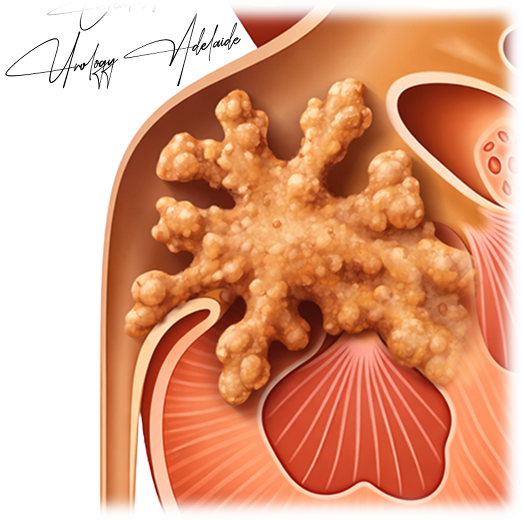
Dr. Kinnear treats all types of kidney stones
Rigid cystoscopy + ureteric stent insertion
Stent insertion allows for urine to drain past an obstructing stone and stretch the ureter
This makes it safer for instruments to reach the stone at a second procedure
Rigid ureteroscopy + laser lithotripsy ± stone basketing + stent insertion
This is a procedure to treat stones in the kidney’s drain pipe or ureter
Flexible pyeloscopy, laser lithotripsy ± stone basketing + stent insertion
Treats stones higher up in the ureter or in the kidney
The flexible pyeloscopy allows Dr. Kinnear to get into tight angles where stones can often be stuck
Percutaneous nephro-lithotomy
Treats large stones in the kidney that cannot be easily done with other procedures
This requires an incision in the back to access the kidney
Flexible cystoscopy + stent removal
A small procedure that can be done awake to remove the a stent after a stone has been treated
Open or laparoscopic pyelolithotomy
An operation that is now rarely required for stone treatment given advances in endoscopic surgical technology
Chemodilution
A course of oral treatment, rather than a procedure
Most stones are not suitable for this method
Treatment options for kidney stones
Observation
Not all stones need treatment. Sometimes follow up scans and often medications are sufficient.
Ureteric stent
Ureteric stents are narrow biocompatible, flexible plastic tubes placed between the kidney and the bladder. This is the most common procedure for kidney stones.
A stent can be inserted on its own initially to unblock a kidney and widen the ureter to allow the telescope to more safely move up the ureter to treat the stone at a later second procedure.
After a kidney stone surgery where the ureter is manipulated, the ureter may swell inwards, causing obstruction. A stent is inserted to hold open the ureter to allow urine to drain until the swelling resolves.
Rigid ureteroscopy
A narrow semi-rigid telescope is carefully advanced up the ureter to view and treat the stone, using a surgical laser (lithotripsy) and/or a ultra-fine basket
Flexible ureteroscopy or pyeloscopy
A narrow flexible telescope is advanced up the ureter to view and treat the stone. A pyeloscopy goes up into the kidney, and a ureteroscopy is only in the ureter.
Percutaneous nephrolithotomy
An approximately 1cm wide tube is carefully placed under imaging-guidance through the back to the kidney. Your urologist places a special telescope through this tube to view and treat the stone. This is best for large (>2cm) or multiple kidney stones.
Other treatments
An open or laparoscopy pyelolithotomy is a rare treatment. It involves making one or more incisions in the abdomen to reach and open the kidney and retrieve the stone. With modern technology this operation has a limited role. A stone can also uncommonly be dissolved. However, this is only appropriate for uric acid stones where obstruction either is not an issue or has been temporarily resolved with a ureteric stent.